A Night in Montreux, and a Different Way of Thinking About Time

At the 60th Montreux Jazz Festival, a bespoke RAYE performance turned a familiar watchmaking idea into something much more personal: a reflection on authorship, memory and how time becomes valuable.
There are invitations where you more or less know what you are going to get before you arrive. There is a beautiful hotel, a carefully planned dinner, a strong guest list, a concert and a series of brand moments designed to make the trip feel worth taking. The programme Audemars Piguet had put together around the opening of the 60th Montreux Jazz Festival contained all of those elements, yet what made the experience memorable was not the individual parts but the way they belonged together.
I had seen the schedule before travelling to Switzerland, so none of the formal stops came as a surprise. We would stay in Vevey, visit Claude Nobs’ chalet, spend time with Audemars Piguet, have dinner at the festival, see RAYE perform at the Stravinski Auditorium and end the evening at an afterparty overlooking the lake. It sounded exceptional on paper, and it was, although the real quality of the experience only became clear once those moments began to form a single narrative.
Montreux is one of those places where history does not feel like something that has been packaged for visitors. Claude Nobs founded the festival in 1967, and over the decades it became associated with artists ranging from Nina Simone and Miles Davis to Marvin Gaye, Prince, Leonard Cohen and David Bowie. What remains distinctive is not only the list of names but the intimacy around the performances and the possibility that an encounter can still feel specific to the place in which it happens.
That became particularly clear during the visit to Chalet Claude Nobs. I am usually cautious when brands use the language of heritage too enthusiastically because history can become an easy substitute for having something current to say, but the chalet made it obvious that the mythology around Montreux did not begin as a marketing construction. It grew from relationships, curiosity and the accumulation of real musical experiences.
That context also made Audemars Piguet’s role at the festival easier to understand. The manufacture has been a Global Partner of the Montreux Jazz Festival since 2019, and APxMusic has developed into a platform for collaborations with musicians rather than functioning only as a communications extension of the watch business.
The connection between watchmaking and music is easy to describe through familiar words such as craftsmanship, precision and timing, but I think the more interesting similarity lies in process. The audience encounters a finished object or a finished performance, while most of the work has happened long before either becomes visible. There are decisions, revisions, repetitions and mistakes that disappear into the final result, and the paradox is that the more resolved the work becomes, the less of that effort the audience should need to notice.


RAYE’s career makes that idea especially resonant. After her previous record label declined to release her debut album, she continued on her own terms and later made history at the 2024 BRIT Awards. Her story is often described through resilience, which is understandable, although I found myself thinking more about authorship while I was in Montreux. The more interesting achievement is not simply that she endured resistance but that she fought for the right to decide what her work should sound like, when it should be released and how she wanted to present herself.
That sense of control becomes obvious when she performs live. The bespoke Montreux show, THIS STAGE MAY CONTAIN MOMENTS IN TIME, had been developed specifically for the opening of the festival’s 60th edition, with Audemars Piguet and RAYE working around ideas of time, memory and musical history.
Once the performance began, however, the conceptual language mattered much less than the fact that she was in complete command of the room. RAYE has the technical ability, stage presence and structural understanding required for a highly produced show, but the quality that stayed with me was her ability to make a large performance feel unusually close. She can create the impression that something is happening in the moment without ever losing control of the larger construction.
That was also when the recurring discussion of time stopped feeling like a convenient brand theme. A watch measures time with extraordinary precision, while the time we actually remember has very little to do with precision. Two hours can disappear almost immediately, while a brief musical moment can remain vivid years later. Live performance makes that contradiction obvious because the experience is temporary even when the memory is durable.
I also think Audemars Piguet handled the cultural partnership intelligently because the brand did not try to dominate every part of the experience. Luxury companies have become increasingly interested in music, art, architecture and cinema because cultural proximity can create meaning beyond the product itself, but consumers are increasingly capable of recognising the difference between a brand that has invested in a cultural environment and one that has simply placed a logo beside it.
In Montreux, the brand was clearly present, but the chalet was allowed to remain about Claude Nobs, the festival was allowed to remain about its own history, and the stage was allowed to belong to RAYE. That kind of restraint is more persuasive than making every frame prove the sponsorship.
The relationship also works because Audemars Piguet’s own history is not presented as something preserved behind glass. The manufacture has been based in Le Brassus since 1875 and remains in the hands of its founding families, yet the relevance of that history depends on what the company continues to do with the knowledge it inherited.
RAYE comes from a completely different world, but there is a similar principle in her career. She inherited the structures of the music industry and eventually decided that those structures did not have to determine the shape of her work. Audemars Piguet inherited generations of watchmaking knowledge and has to make the same kind of decision in a different context: which parts of the inheritance are essential and which parts must continue to evolve.
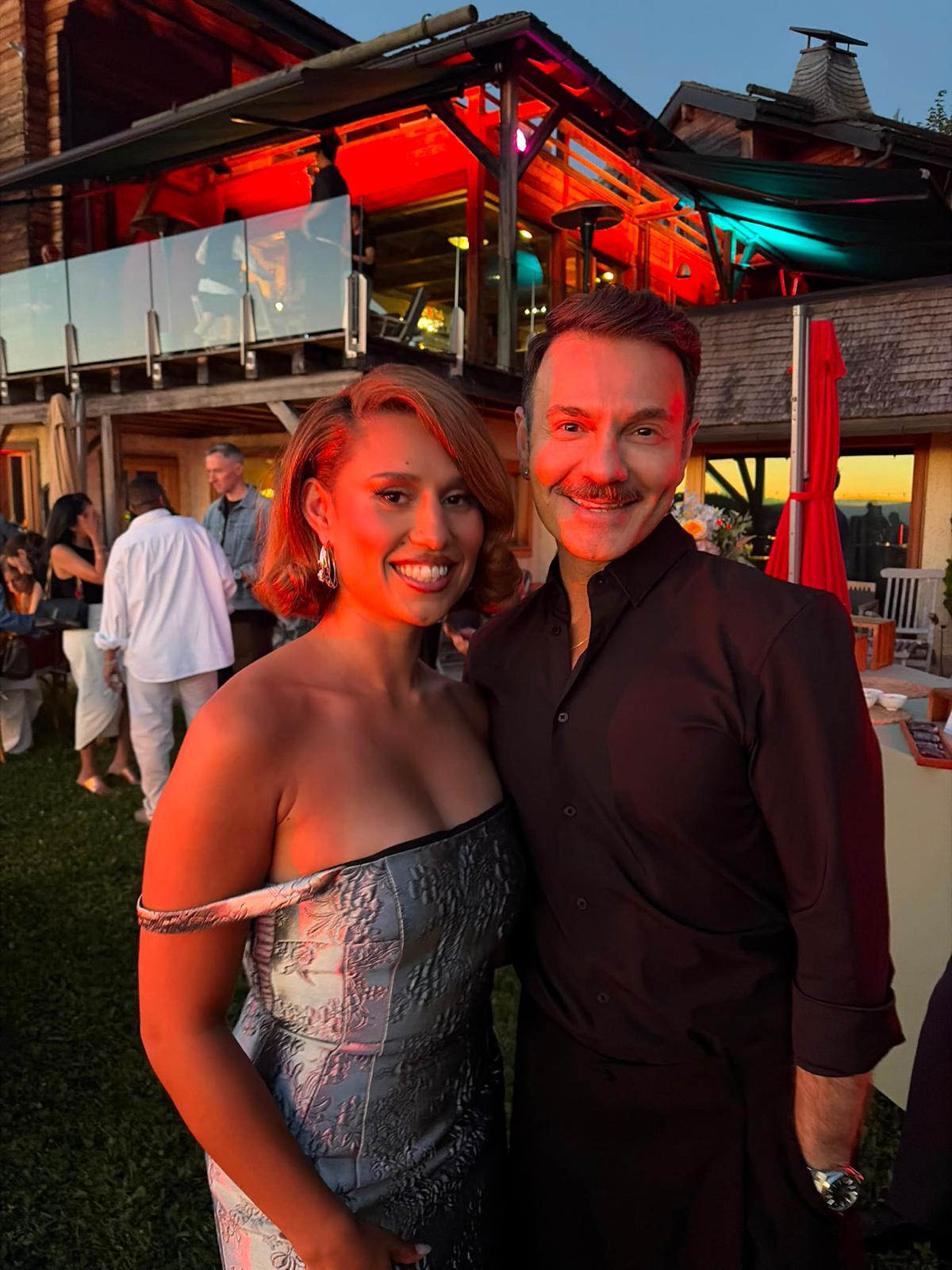
By the time we reached the afterparty at the Lake House, the carefully structured programme had relaxed into what good evenings usually become once the formal part is over. People were talking, dancing and staying longer than planned, and I remember looking over the lake and thinking how unusual it was that a few days organised around watches had made me think considerably less about measuring time and much more about the way we use it.
I went to Montreux expecting an exceptional performance, and I saw one. What stayed with me, however, was the relationship between a 150-year-old manufacture, an artist whose career changed because she insisted on authorship, a festival celebrating six decades of music and a house filled with the traces of encounters that could never have been planned as a marketing strategy.
None of those things were compelling simply because they were prestigious, historic or exclusive. They mattered because each had used time to develop a recognisable point of view, and that is where craftsmanship becomes more interesting than the number of hours something takes to make.
Time does not automatically create value, just as heritage does not automatically create relevance. Both become meaningful when they lead to better judgement, stronger authorship and a clearer understanding of what deserves to remain. Watching RAYE in Montreux made that idea unusually easy to understand.
credits
Words and personal perspective
Taskin “Tash” Yüksel
Disclosure
Taskin attended the Montreux programme as an invited guest of Audemars Piguet. This article is an independent personal reflection and was not commissioned unless otherwise agreed in writing.
Location
Montreux, Switzerland
Publication
Exclusive to tash.at
