When an Object Becomes a Talisman

A reflection on CŒUR, Yves Saint Laurent’s heart motif and the private mythology that gives luxury objects their emotional weight.
Some luxury objects become valuable because they are rare, while others become valuable because someone returns to them often enough for the object to acquire a private meaning that has very little to do with price. That distinction was what interested me when I wrote about CŒUR from Yves Saint Laurent’s Le Vestiaire des Parfums for MAISON Ë.
The starting point was Yves Saint Laurent’s heart-shaped talisman, an object that existed publicly but was also intensely personal. Fashion tends to be discussed through material, silhouette and status, yet many of its most powerful objects operate psychologically. We attach memory, identity and desire to them until their emotional function becomes more important than their practical one.
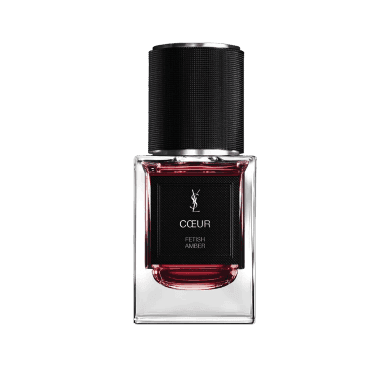
Perhaps this is the most elegant definition of luxury: an object that ceases to be an object—but instead, becomes part of one’s own mythology.
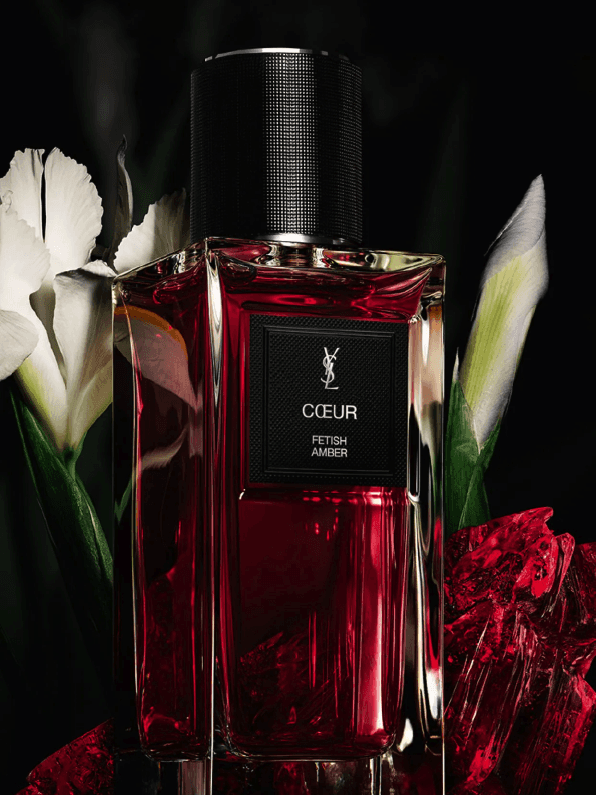
A talisman is a useful way of thinking about luxury because its value is not self-explanatory. It becomes significant through repetition and belief, through the private history accumulated around it. The heart associated with Saint Laurent is interesting for precisely that reason. Its importance does not come from the fact that it is a heart, but from the fact that it became a constant within a much larger creative life.
Perfume is an especially natural continuation of that idea because scent works in a similarly intimate way. It is invisible and difficult to separate from memory. We return to a fragrance until it begins to belong to particular places, people and versions of ourselves, and eventually the scent can carry an emotional weight that is completely disproportionate to the object sitting on the shelf.
CŒUR translates that territory into fragrance, but what mattered to me in the original story was not to describe the product as though a list of notes could explain it. The more interesting question was why luxury repeatedly returns to symbols, rituals and objects that become personally charged. When a house is at its best, it does not simply produce desirable things; it creates enough space around those things for people to give them meaning of their own.
That is also where the difference between ornament and attachment begins to matter. Ornament can be admired from a distance, whereas attachment requires time. The object becomes part of a routine, a memory or a self-image, and the consumer eventually contributes as much to its significance as the brand does.
This is one reason I remain interested in fragrance as a cultural category. It sits somewhere between product and memory, and because it cannot be seen once it is worn, its value is unusually dependent on association. The bottle may be designed, photographed and marketed, but the real life of the fragrance begins after all of that, when it becomes part of someone else’s story.
The original CŒUR piece was therefore never intended as a conventional product review. It was a way of looking at the emotional infrastructure of luxury and at the point where an object stops merely communicating value and starts carrying it privately. For me, that remains one of the most convincing forms of luxury because it depends less on being recognised by everyone else and more on being meaningful to the person who lives with it.
credits
Words and perspective
Taskin “Tash” Yüksel
Original publication
MAISON Ë, July 2026
Website note
This is a newly written retrospective and not a reproduction of the original MAISON Ë article.
Photography
PR
